VeriSci.AI (SaaS B2B)
Content creation tool for public health officials that builds trust in AI and achieves a great usability score of 75.8
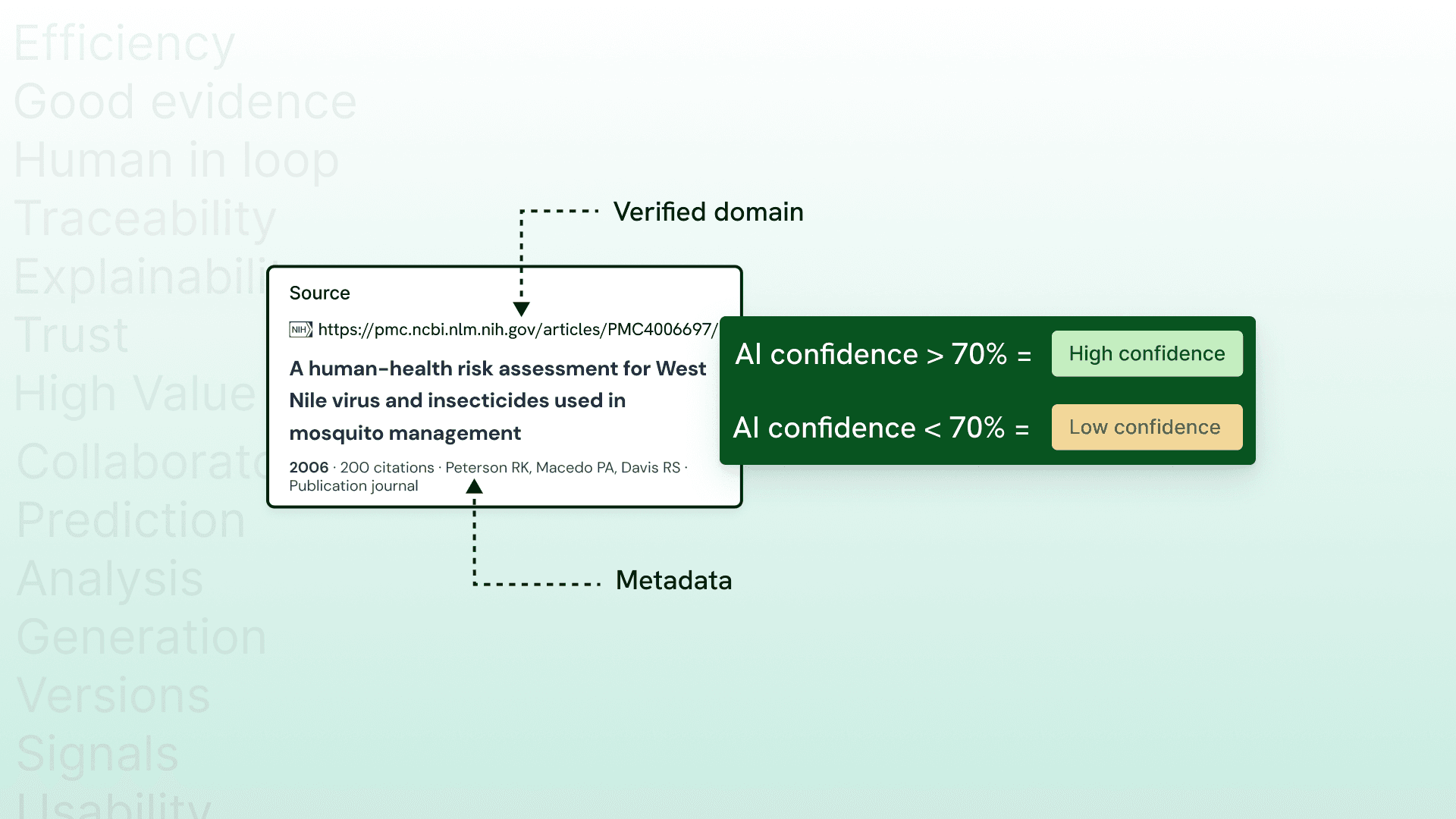
VeriSci helps public health teams move from fragmented workflows to a unified writing and source-checking for media campaigns.
Role
Lead Product Designer
Time
Jan 2025 - August 2025
Team
4 Designers
20+ cross-functional team
My contribution
Mentoring designers, team facilitation, cross-functional collaboration, roadmap planning, and AI MVP definition.
We have a problem
Inaccurate data, approval delays, and fragmented workflows made timely public-health marketing difficult.
So,do they use AI?... Answer is Yes.
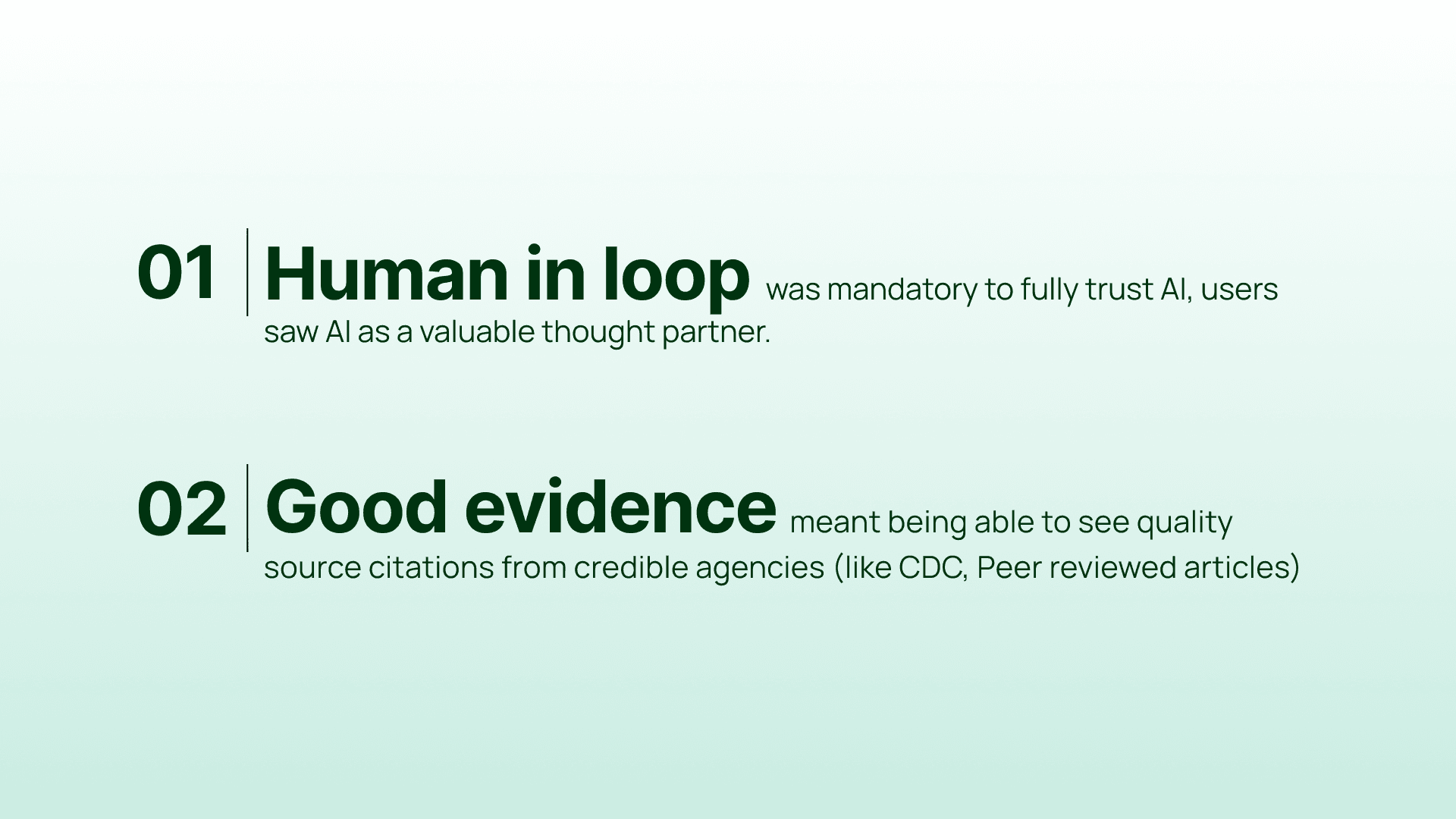
27+ interviews were conducted asking questions on AI use, productivity, workflows and features. Above listed were the top insights from the user interviews.
Feature Priortization: Chat, Text based generation, Sources, Text Editor
16 users marked most common tasks based on importance, difficulty, control, time spent, AI openness. This guided us in the Feature prioritization of the MVP. Over the course of this project, we talked to approximately 40+ public health officials.
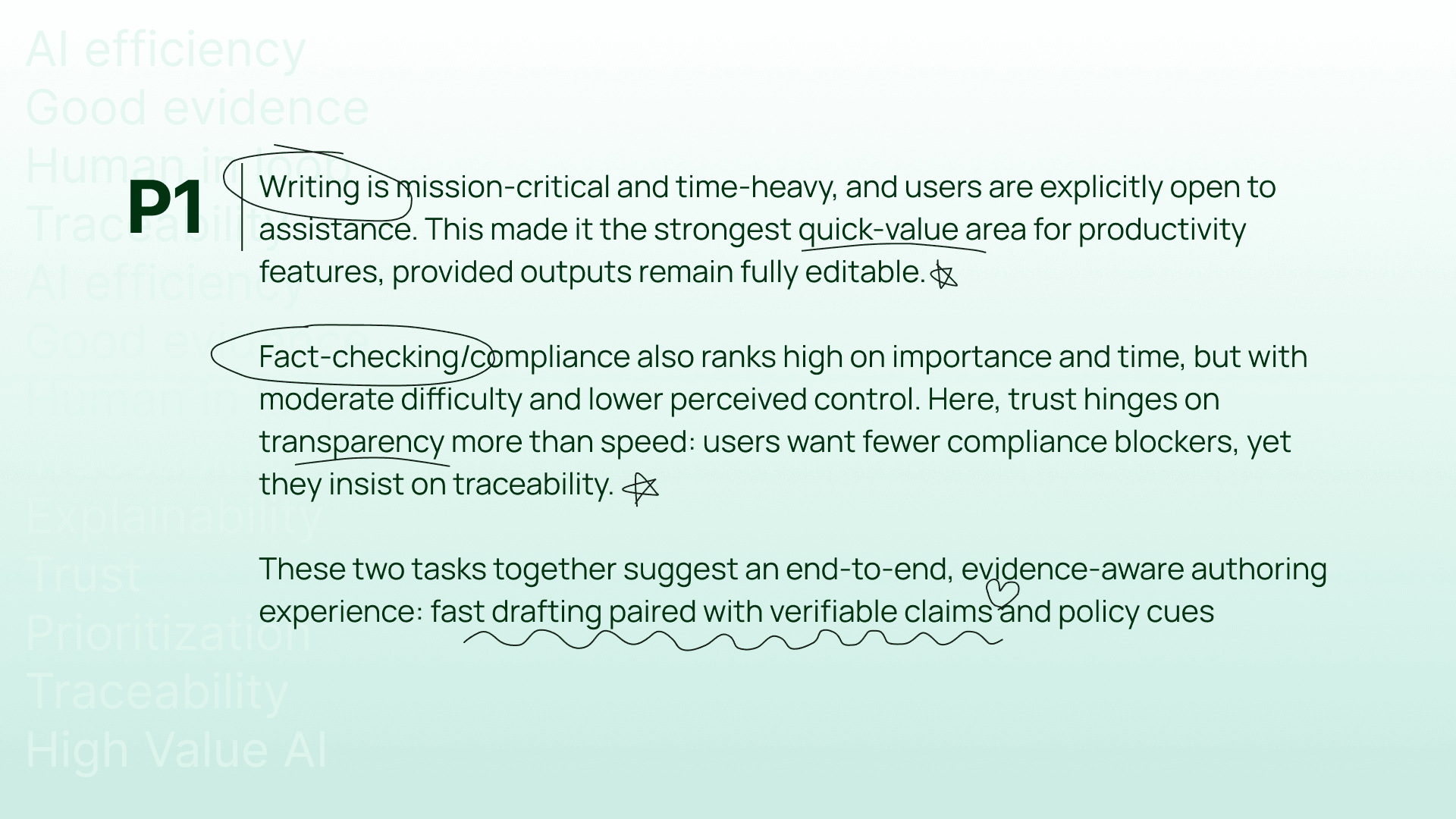
Results from interviews and task ranking activity confirmed our intuition. Writing and source-checking ranked the most important features with underlying themes of AI bringing efficiency, transparency and user control in the workflow.
Solution space
Not re-inventing the wheel
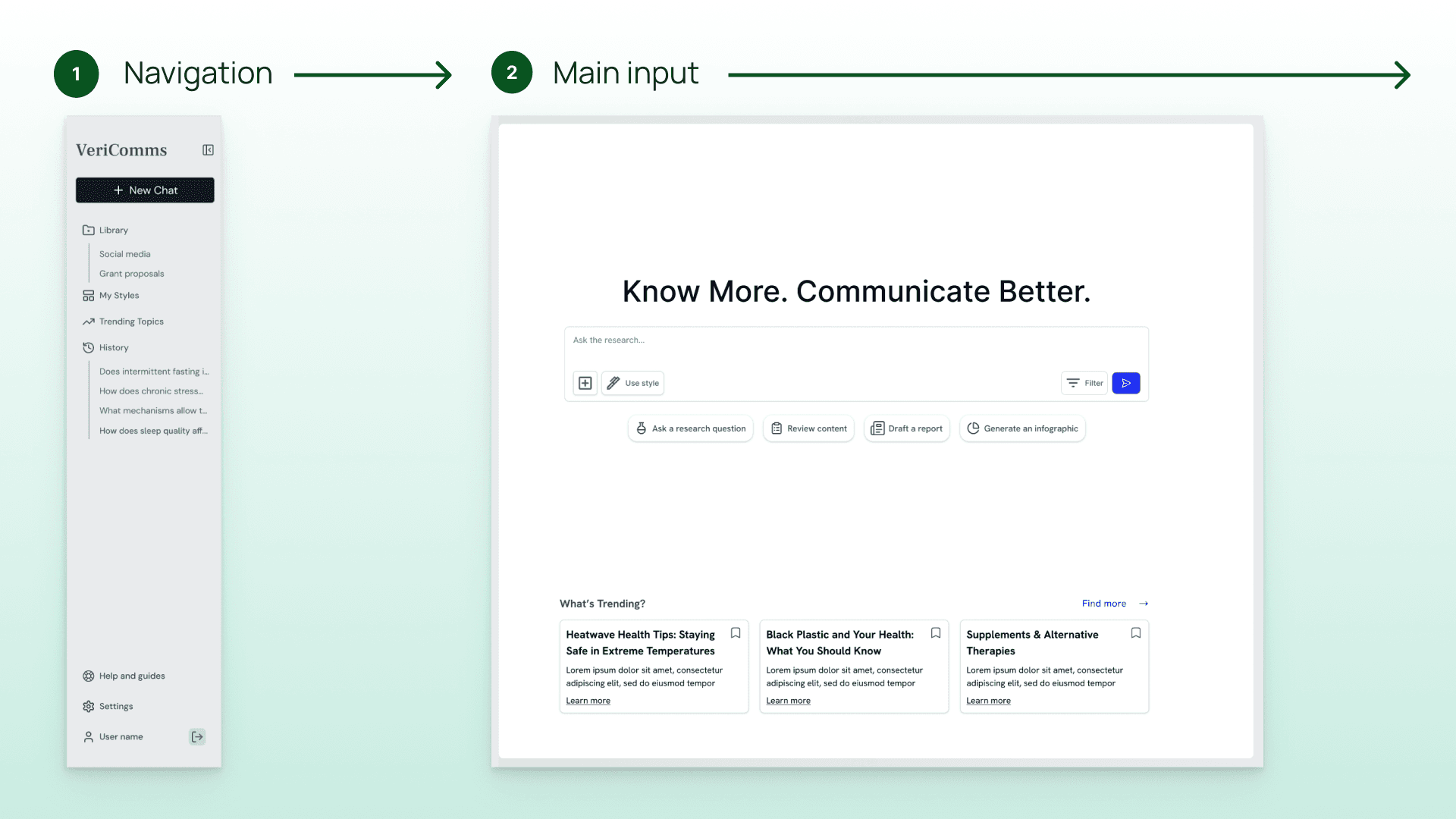
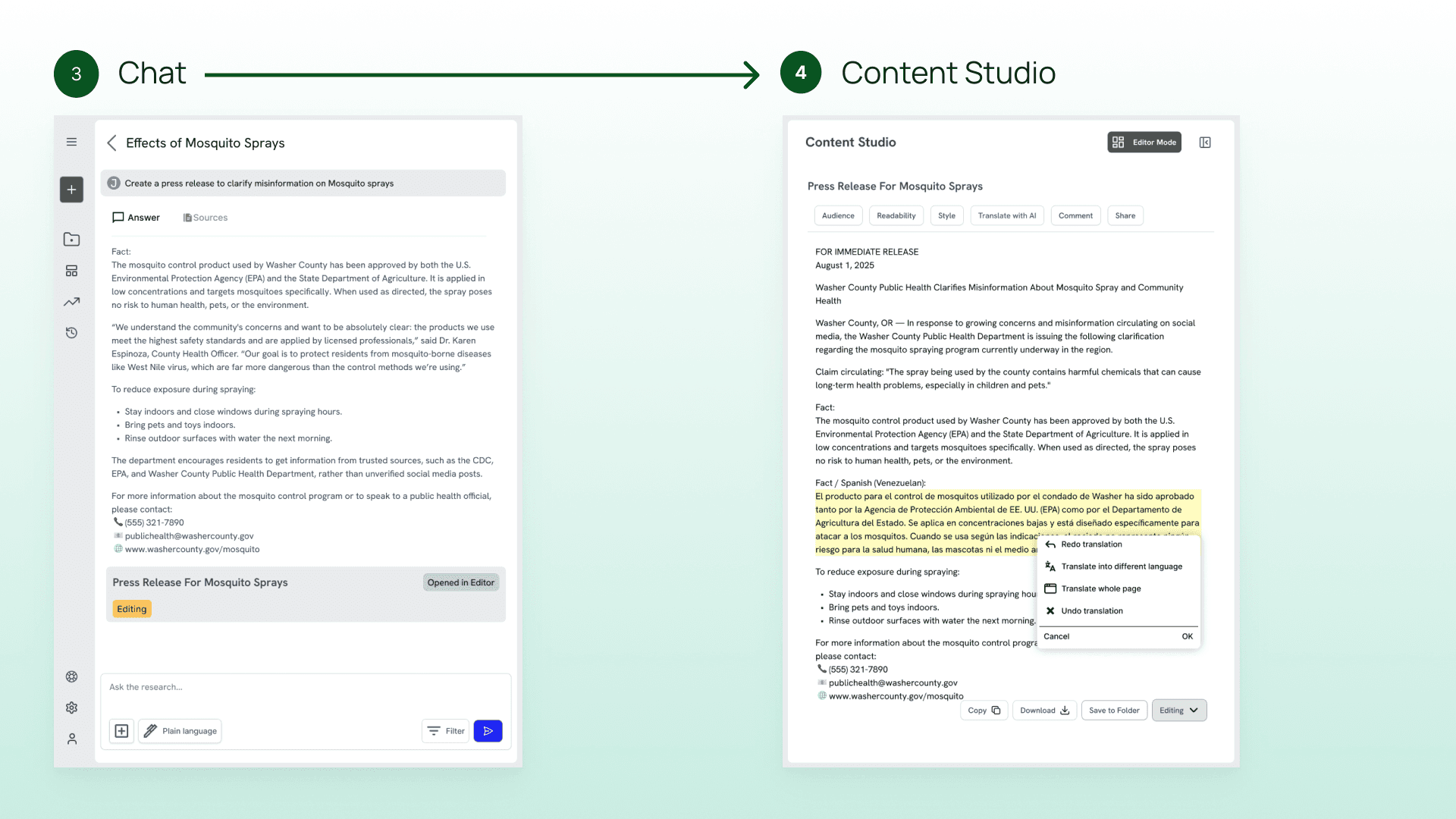
We adapted known editing and content-review patterns to reduce learning curves while keeping AI interactions transparent.
Solution space
Trust has legs
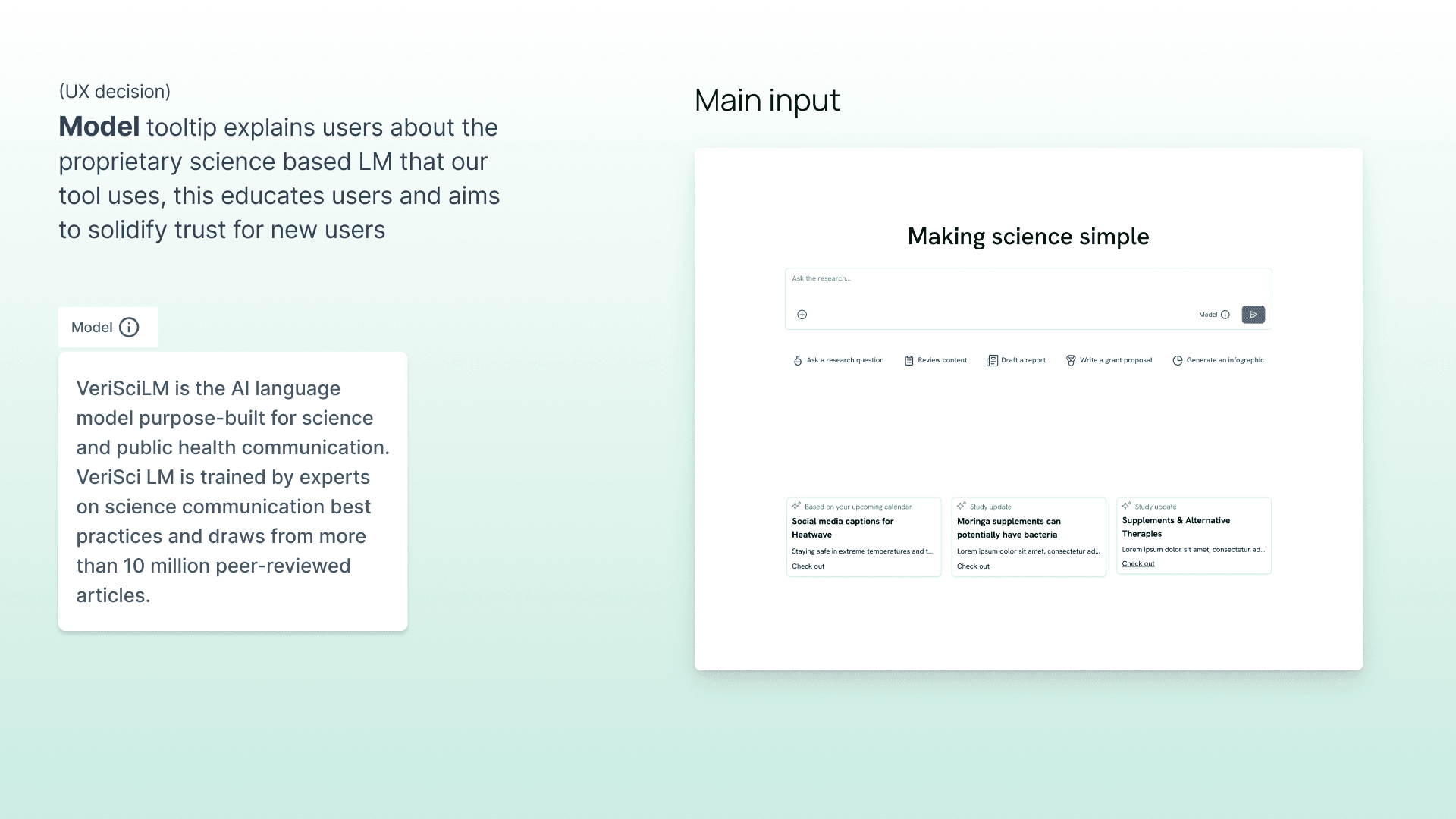
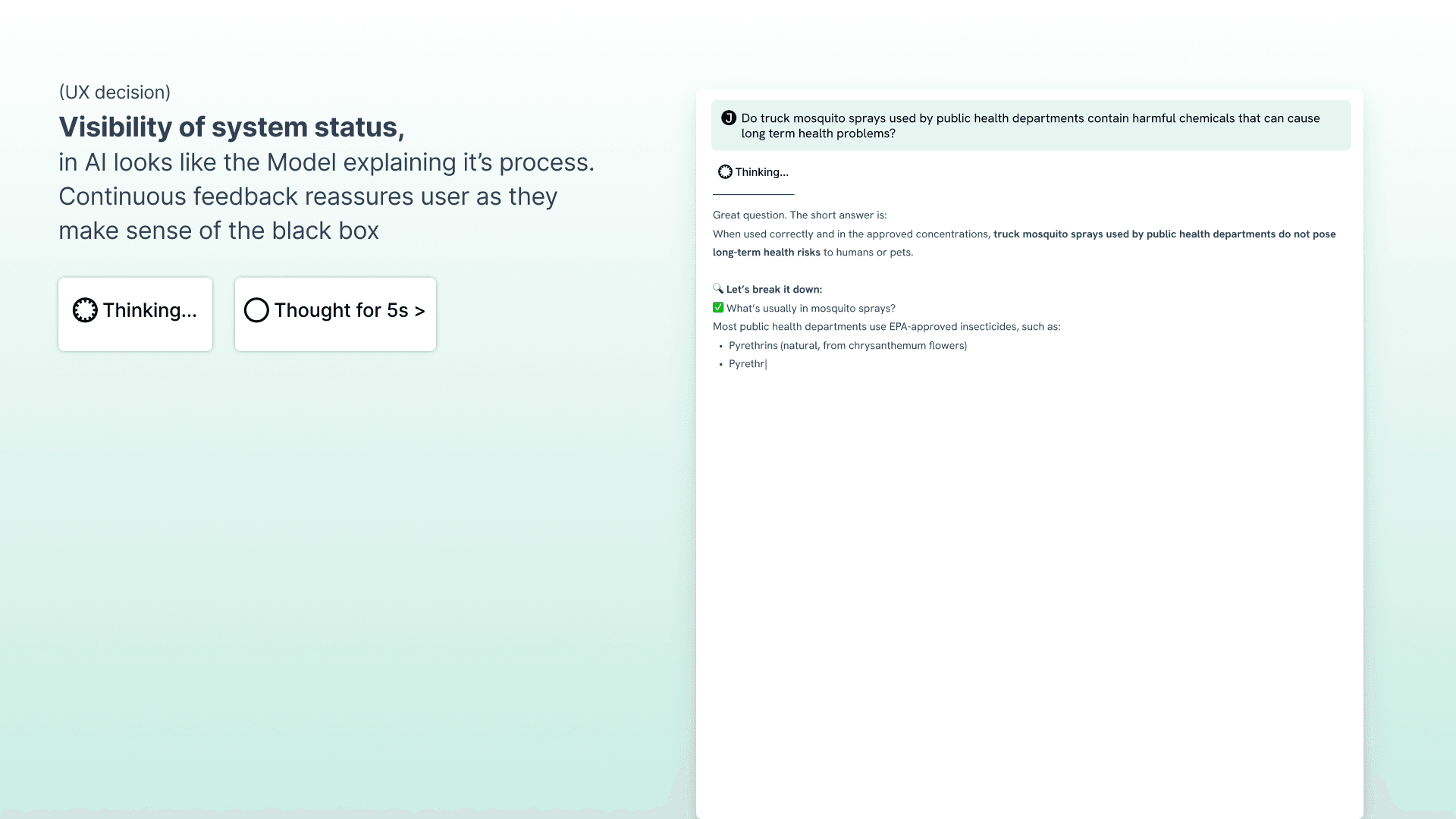
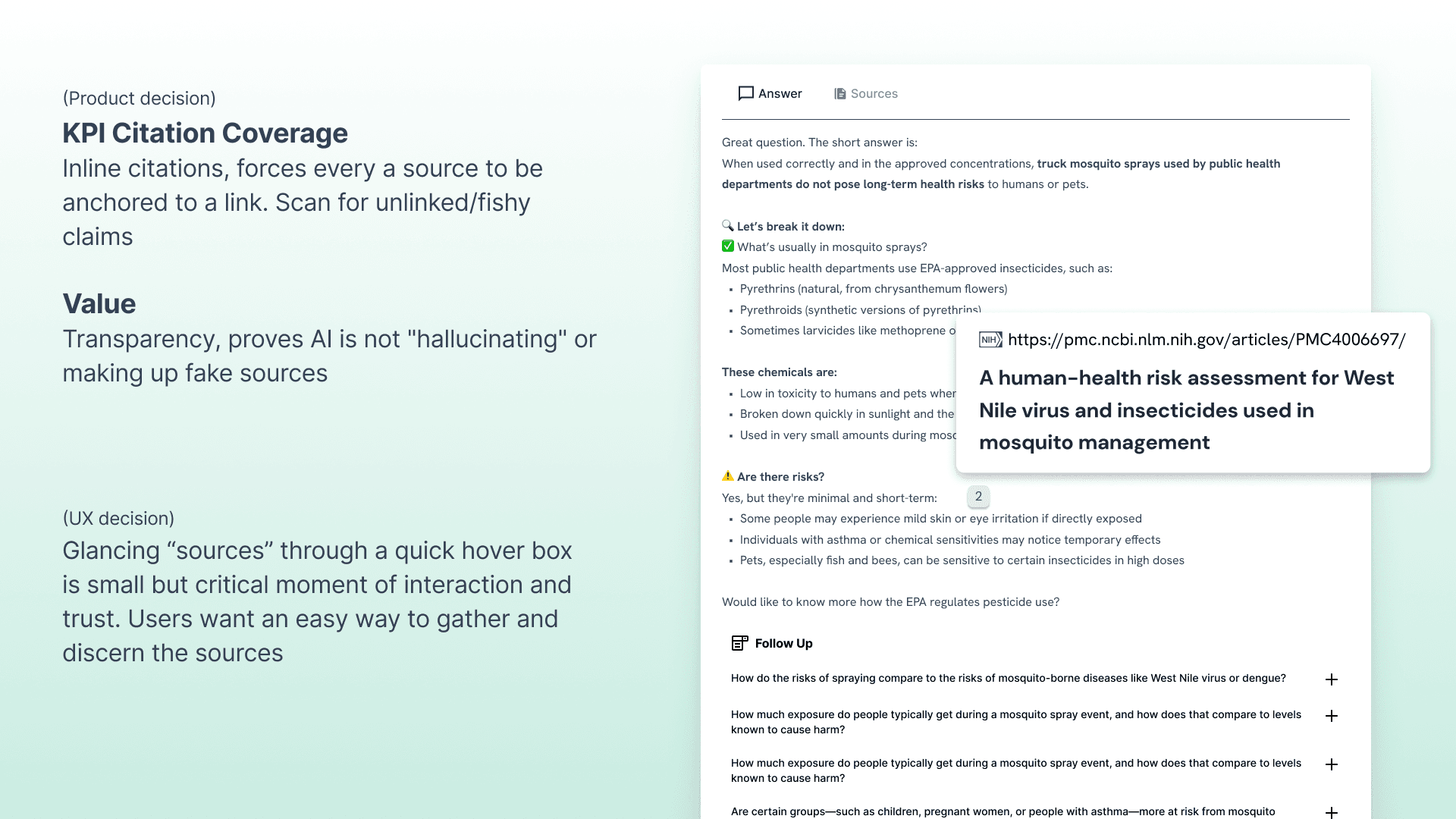
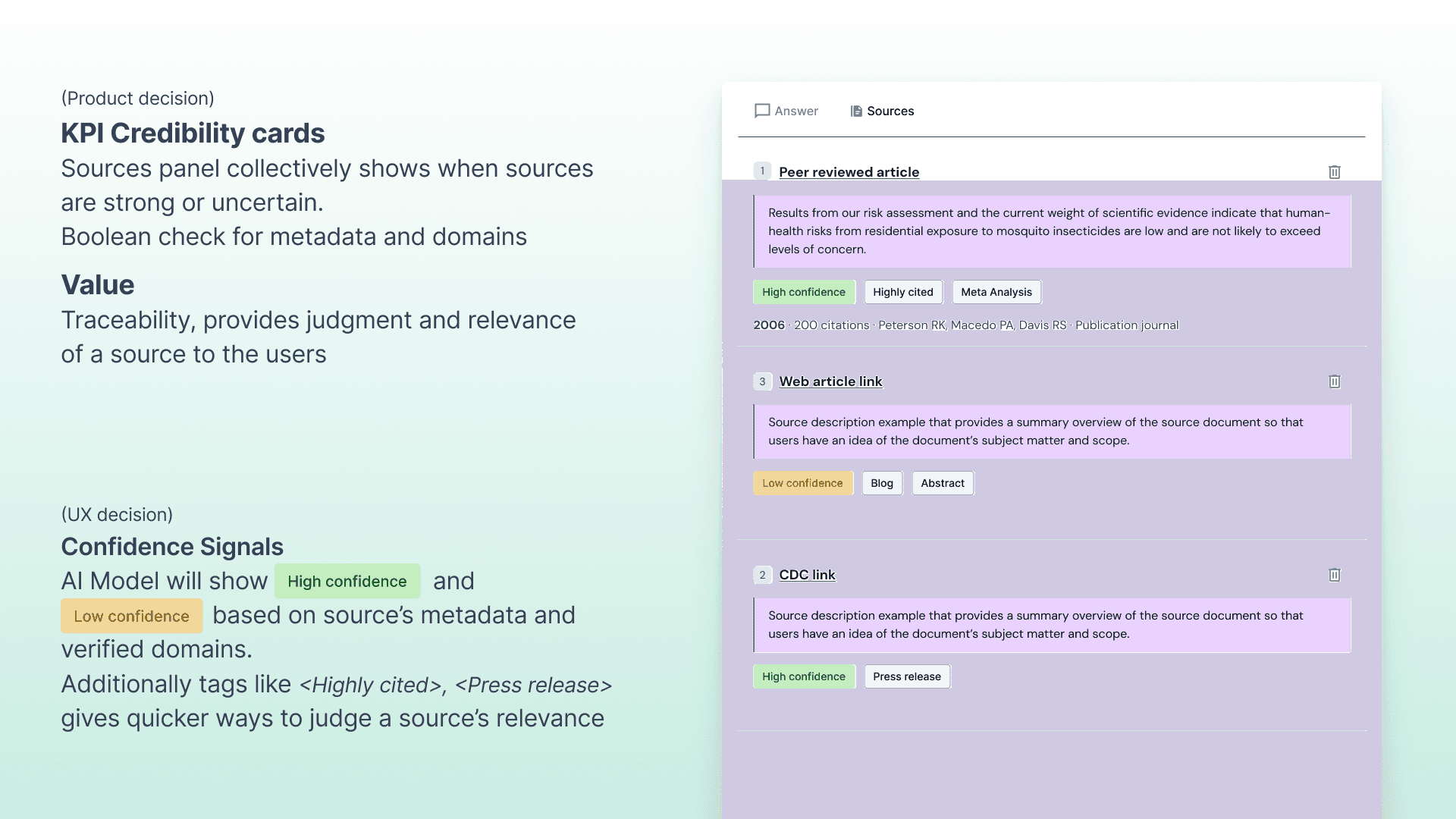
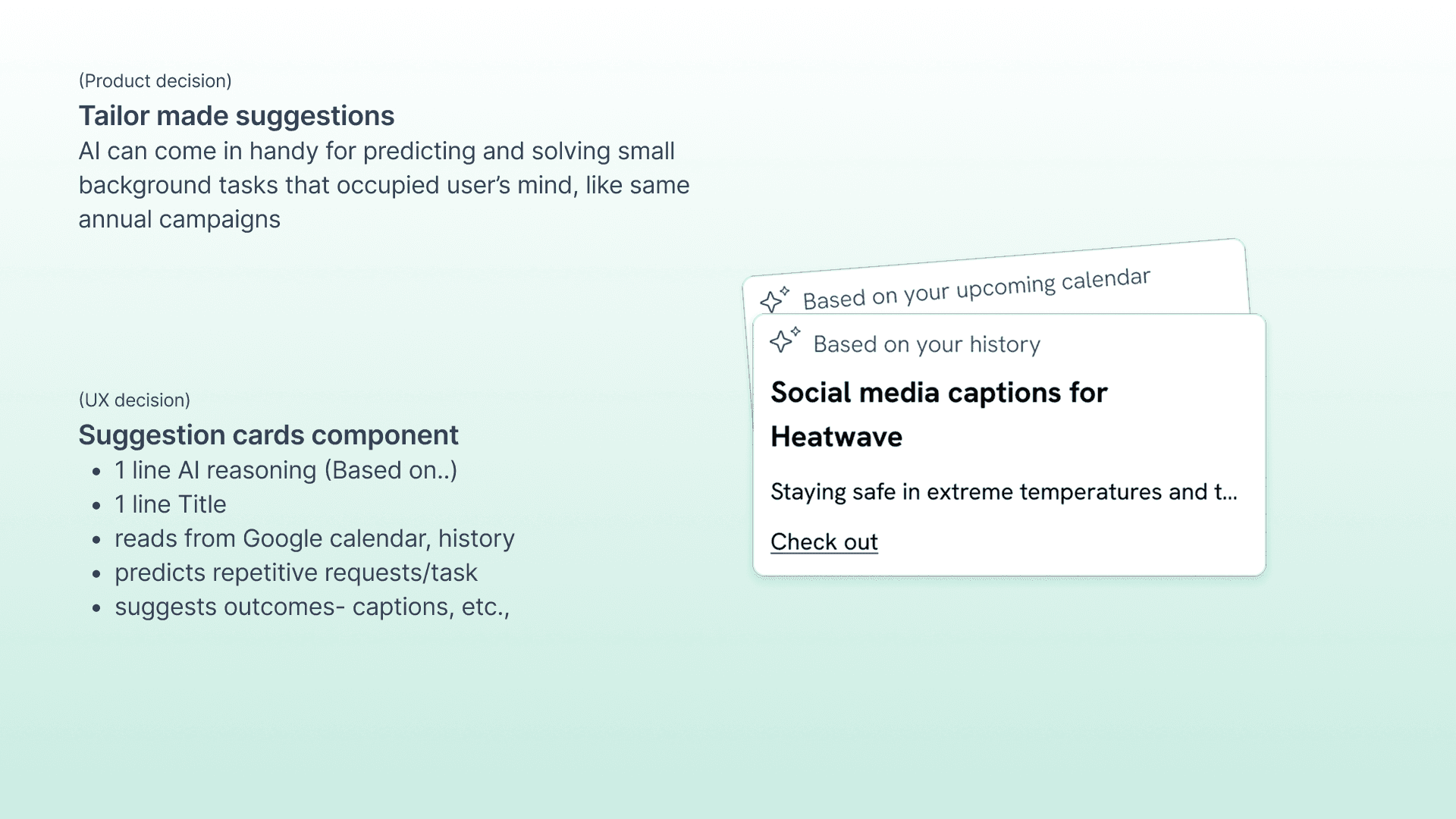
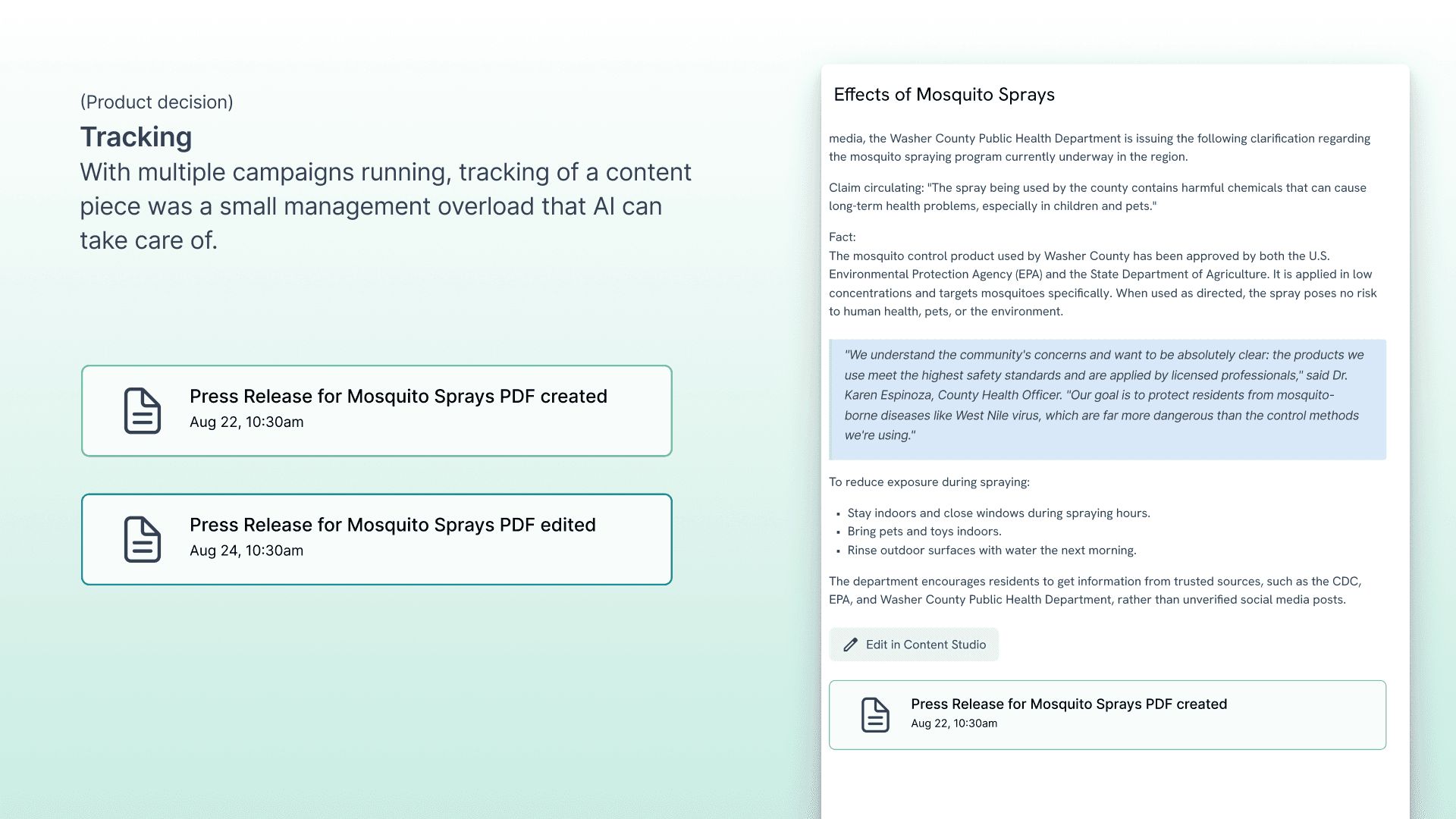
“Trust” is not a vague aspiration. It is moving, evolving and built with small moments through out the journey. It's a business promise, tied to KPIs, supported by features, and validated through instrumentation.
UX decisions were guided by design principles and user feedback.
Product decisions created a pipeline of execution to fulfill the KPIs of trust.
Validation
Feedback and improvement
We moved quick. We built a Figma prototype with mid-fidelity wireframes to capture insights with an enthusiastic pool of users. We received general usability feedback but showing the AI feature specific feedback that were added to the subsequent iteration.
Things that went right
1. The team was internally aligned resulting in little to no wasted efforts and was more efficient.
2. Client collaboration was timely and in-depth.
3. We could justify our design decisions since we backed them up with data and study from the user research.